

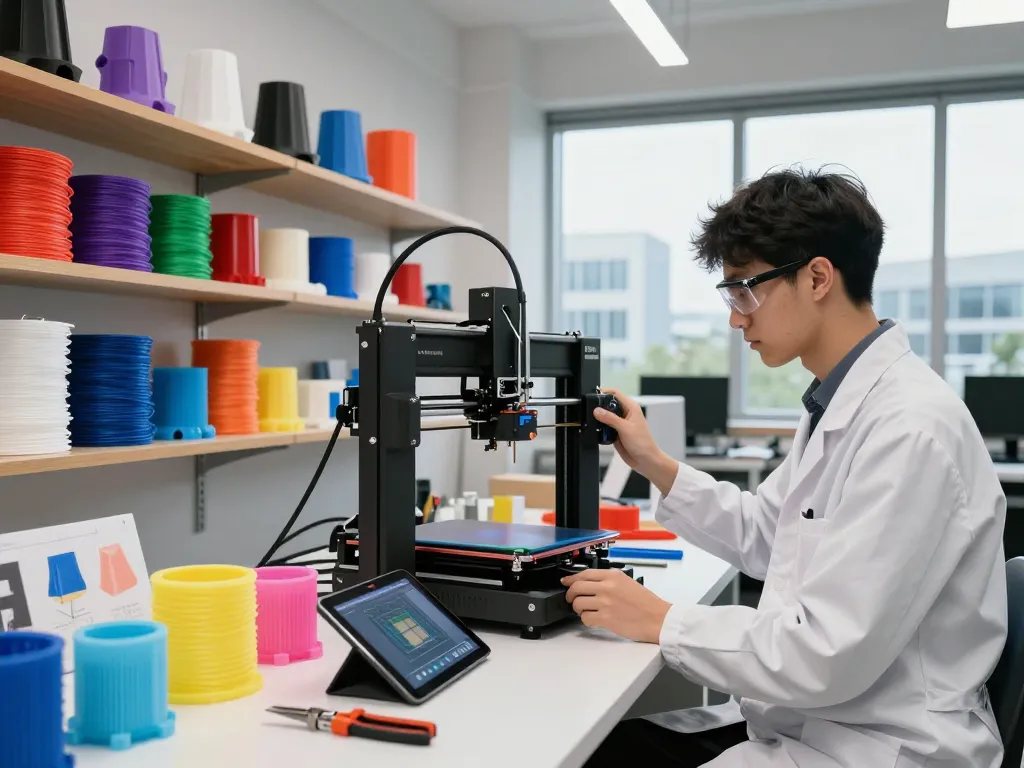
Understanding 3D Printing: Basics and Benefits
3D printing, also known as additive manufacturing, has revolutionized various industries by enabling the creation of complex three-dimensional objects from digital models. This innovative technology allows for a level of customization and efficiency that traditional manufacturing methods cannot match. In this article, we will explore the fundamentals of 3D printing, its numerous benefits, and some common misconceptions that can cloud the understanding of this technology. Additionally, we will delve into materials, design principles, and future trends that shape the landscape of 3D printing today.
What is 3D Printing and How Does It Work?
At its core, 3D printing is the process of creating physical objects layer by layer from a digital design. The journey begins with a 3D model, often generated using CAD (Computer-Aided Design) software. This model is sliced into thin layers using slicing software, which generates the necessary instructions for a 3D printer. The printer then builds the object by laying down successive layers of material until the finished product emerges.
Different technologies exist within 3D printing, including Fused Deposition Modeling (FDM), Stereolithography (SLA), and Selective Laser Sintering (SLS). Each method varies in terms of materials used, precision, and applications.
Key Benefits of Adopting 3D Printing Technology
The benefits of integrating 3D Printing into various sectors are substantial and multi-faceted:
- Cost-Effectiveness: 3D printing can significantly reduce production costs by minimizing waste and eliminating the need for complex tooling and molds.
- Speed: Rapid prototyping enables businesses to bring products to market faster, as iterations can be printed and tested promptly.
- Customization: 3D printing facilitates mass customization, allowing for products tailored to individual user specifications without substantial increases in cost.
- Complex Design Capability: The technology enables intricate designs that would be impossible or prohibitively expensive with traditional manufacturing methods.
- Reduced Supply Chain Complexity: On-demand production reduces the need for extensive supply chains, minimizing storage costs and delays associated with shipping.
Common Myths and Misconceptions About 3D Printing
Despite its advantages, many myths surround 3D printing:
- 3D Printing is Only for Prototyping: While commonly used for prototyping, 3D printing is increasingly viable for end-use parts in industries such as aerospace and healthcare.
- 3D Printing is Only for Hobbyists: The technology has evolved significantly, with industrial applications growing rapidly across various sectors.
- 3D Printing is Too Expensive: While initial costs can be significant, long-term savings and efficiencies make it a worthwhile investment for many businesses.
Exploring Materials for 3D Printing: Options and Innovations
Material selection plays a crucial role in the 3D printing process, influencing the performance, durability, and aesthetic appeal of the final product. With ongoing advancements, the variety of materials available is continually expanding.
Popular Materials Used in 3D Printing
Some commonly used materials in 3D printing include:
- PLA (Polylactic Acid): A biodegradable plastic that is easy to print and suitable for various applications.
- ABS (Acrylonitrile Butadiene Styrene): Known for its strength and durability, making it ideal for functional parts.
- Nylon: Offers excellent flexibility and strength, commonly used for industrial applications.
- Resins: Used in SLA printing, resins produce high-detail prints and are ideal for jewelry and dental applications.
- Metal Filaments: Incorporating metal powders into filaments allows for parts that mimic the properties of traditional metal components when printed.
Innovative Materials and Their Applications in 2026
As the 3D printing industry progresses, new materials are emerging:
- Biomaterials: Designed for medical applications, these materials can be used for tissue engineering and custom prosthetics.
- Smart Materials: Materials that react to environmental stimuli are being explored for various innovative applications.
- Recycled Filaments: Sustainability is becoming a priority, with innovations focused on using recycled plastics in 3D printing.
Choosing the Right Material for Your 3D Printing Projects
Selecting an appropriate material depends on various factors, including:
- Desired strength and flexibility
- Tolerance to heat and environmental conditions
- Cost considerations
- Post-processing requirements
Best Practices for Designing 3D Models
To achieve successful outcomes in 3D printing, understanding design principles is essential. Practicing best design standards can improve print quality and overall project success.
Essential Software Tools for CAD Modeling
Numerous software tools are available for creating 3D models, with options tailored to different skill levels:
- TinkerCAD: A user-friendly web-based platform for beginners.
- Fusion 360: Offers advanced features suitable for professional designers.
- Blender: A powerful tool for artistic modeling and animation.
Design Principles for Successful 3D Prints
Key design principles include:
- Wall Thickness: Ensure that walls are thick enough to support structural integrity.
- Overhangs: Design with supports in mind, or optimize for minimal overhang to reduce the need for support structures.
- Orientation: Consider print orientation to enhance strength and appearance.
Common Design Challenges and Solutions
Challenges in 3D design may arise, but solutions exist:
- Warping: Use a heated bed and proper material settings to minimize warping.
- Stringing: Adjusting retraction settings can help reduce unwanted stringing between features.
- Layer Adhesion: Ensure the correct printing temperature for optimal layer adhesion.
3D Printing Process: Step-by-Step Guide
Navigating the 3D printing process requires careful steps to achieve the desired result. Following a structured approach ensures success from model preparation to post-processing.
Preparing Your 3D Model for Printing
Ensure your model is properly optimized for 3D printing by checking for:
- Non-manifold edges
- Correct scale and dimensions
- Closed meshes without holes
Setting Up Your 3D Printer: Tips and Tricks
Proper printer setup is essential for a successful print:
- Calibrate the printer before each use.
- Ensure the nozzle and bed are clean.
- Use the right slicing settings for the material.
Post-Processing Techniques for Finishing 3D Printed Objects
Post-processing can enhance the aesthetic appeal and functionality of 3D prints:
- Sanding: Smooth surfaces for a professional finish.
- Painting: Apply primer and paint for added visual effects.
- Gluing Parts: Use adhesives for multi-part assemblies.
Future Trends in 3D Printing: What to Expect by 2026
The future of 3D printing is poised for significant transformation, driven by innovations and the growing adoption of the technology across various industries.
Emerging Technologies in 3D Printing
New advancements are expected to impact the industry:
- Multi-material Printing: Enables the combination of different materials in a single print, leading to more complex parts.
- Automation: Increasing automation in 3D printing processes will enhance efficiency and reduce labor costs.
Industry Applications Poised for Growth
Several sectors are set to benefit from the evolution of 3D printing:
- Aerospace: Lightweight parts can enhance fuel efficiency.
- Healthcare: Personalized medical devices and implants are increasingly feasible.
- Construction: 3D printing is being explored for building entire structures using innovative materials.
Predictions for the Future of 3D Printing
Experts anticipate:
- Greater accessibility to 3D printing technology for small businesses.
- Increased integration of AI in design and production processes.
- A shift toward sustainable materials and practices within the industry.
How Can 3D Printing Change Manufacturing?
3D printing is set to redefine manufacturing paradigms:
- Decentralization of manufacturing locations through local production capabilities.
- Enhanced product lifecycle management, enabling longer-lasting parts and reduced waste.
How Sustainable Practices are Evolving in 3D Printing?
The focus on sustainability is growing:
- Companies are investing in the development of biodegradable and recyclable materials.
- There is an increasing trend towards using less material through optimized design processes.